
Why Your Solar Leads Are Going Cold Before You Call Them Back
By SolarLeadAds Team · August 28, 2026

TL;DR
- Solar buyers request quotes from 3-5 companies at once — the first call usually wins.
- Response times over 30 minutes can cut your contact rate by more than half.
- Shared/aggregator leads get called by everyone at once — you're racing, not selling.
- Exclusive, real-time leads paired with a fast follow-up process fix most of this.
Most solar companies don't have a lead generation problem. They have a lead response problem. If you're an installer, seller, or technician in the US, UK, or Australia and you've noticed your calendar is full of "quotes" but short on installs, the issue is rarely the ad, the offer, or even the price. It's the clock.
The 5-Minute Rule Nobody Tells You About
Homeowners researching solar rarely fill out one form. They fill out three, four, sometimes five — comparing quotes is the entire point of the exercise. That means the moment a lead lands in your inbox, it's also landing in a competitor's inbox. Whoever picks up the phone first usually sets the anchor for the whole conversation, and every company that calls after that is fighting an uphill battle.
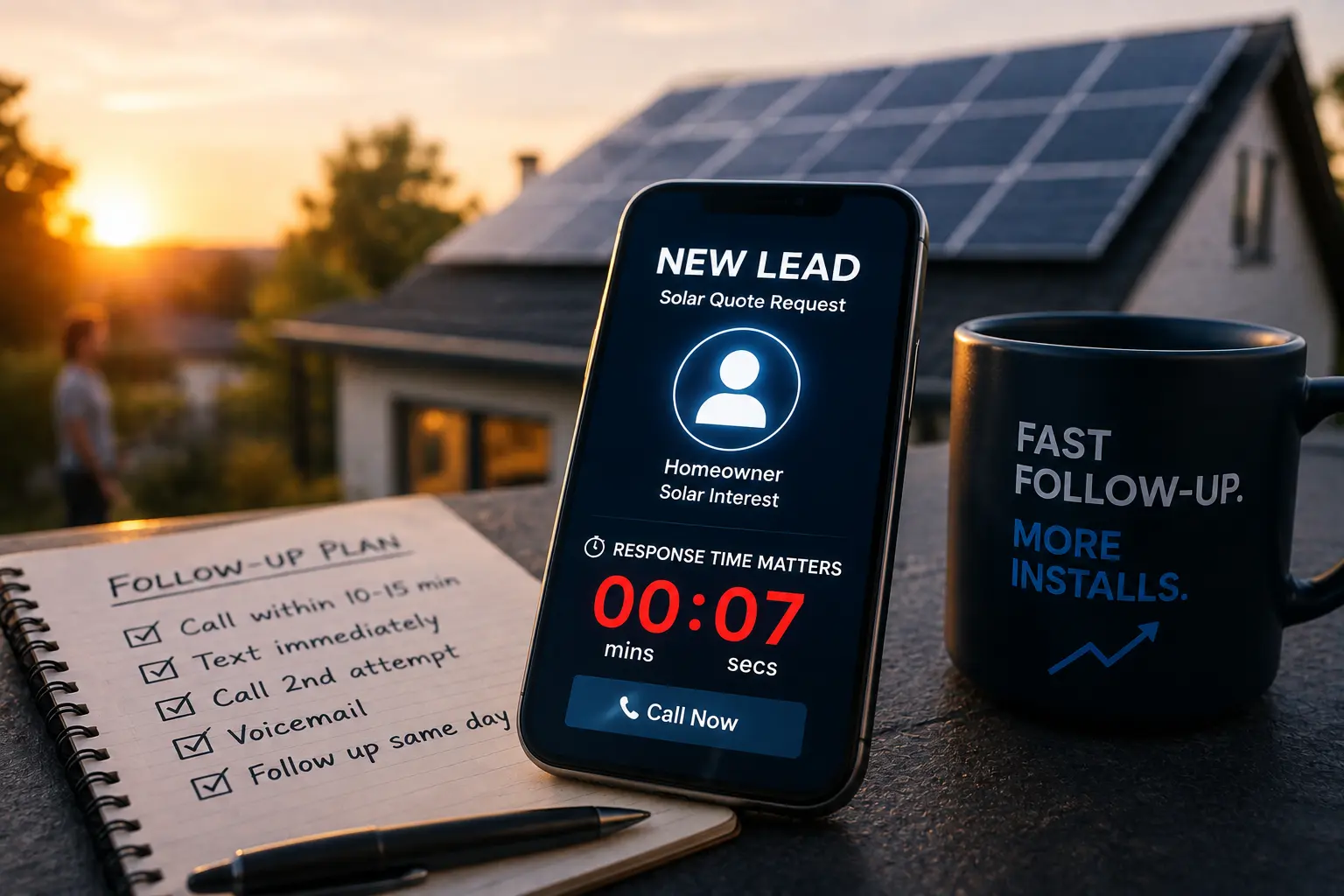
Industry response-time studies across service businesses consistently show the same pattern: contact rates fall off sharply after the first five minutes, and keep falling the longer a lead sits untouched. For solar specifically, where the sale involves trust, a big price tag, and a long consideration window, that first impression matters even more.
Why "More Leads" Doesn't Fix a Slow Follow-Up Problem
A common reaction to a low close rate is to buy more leads. But if your team is already struggling to call people back same-day, adding volume just means more leads going cold, not more installs. Before increasing spend, it's worth auditing three things:
| Question | Why it matters |
|---|---|
| How long between form submission and first call attempt? | Anything over 30 minutes puts you behind competitors who called first. |
| How many call attempts per lead before giving up? | Most homeowners don't answer an unknown number on the first try. |
| Are leads shared with other companies? | Shared leads mean you're always racing, never selling on your own terms. |
Shared Leads vs Exclusive Leads
A lot of solar businesses don't realize their "leads" are being sold to several installers at once through aggregator platforms. That's not inherently a scam — it's just a different business model, and it changes how you have to sell. With shared leads, speed is almost the only variable you control. With exclusive leads, generated directly for your business through your own Meta ad campaigns, you're the only one that homeowner has heard from — which changes the entire tone of the call.
A slower follow-up process on exclusive leads will almost always outperform a fast follow-up process on shared leads — because you're not racing anyone. But combine exclusive leads with a fast process, and that's where the real close-rate jump happens.
What a Fast Follow-Up Process Actually Looks Like
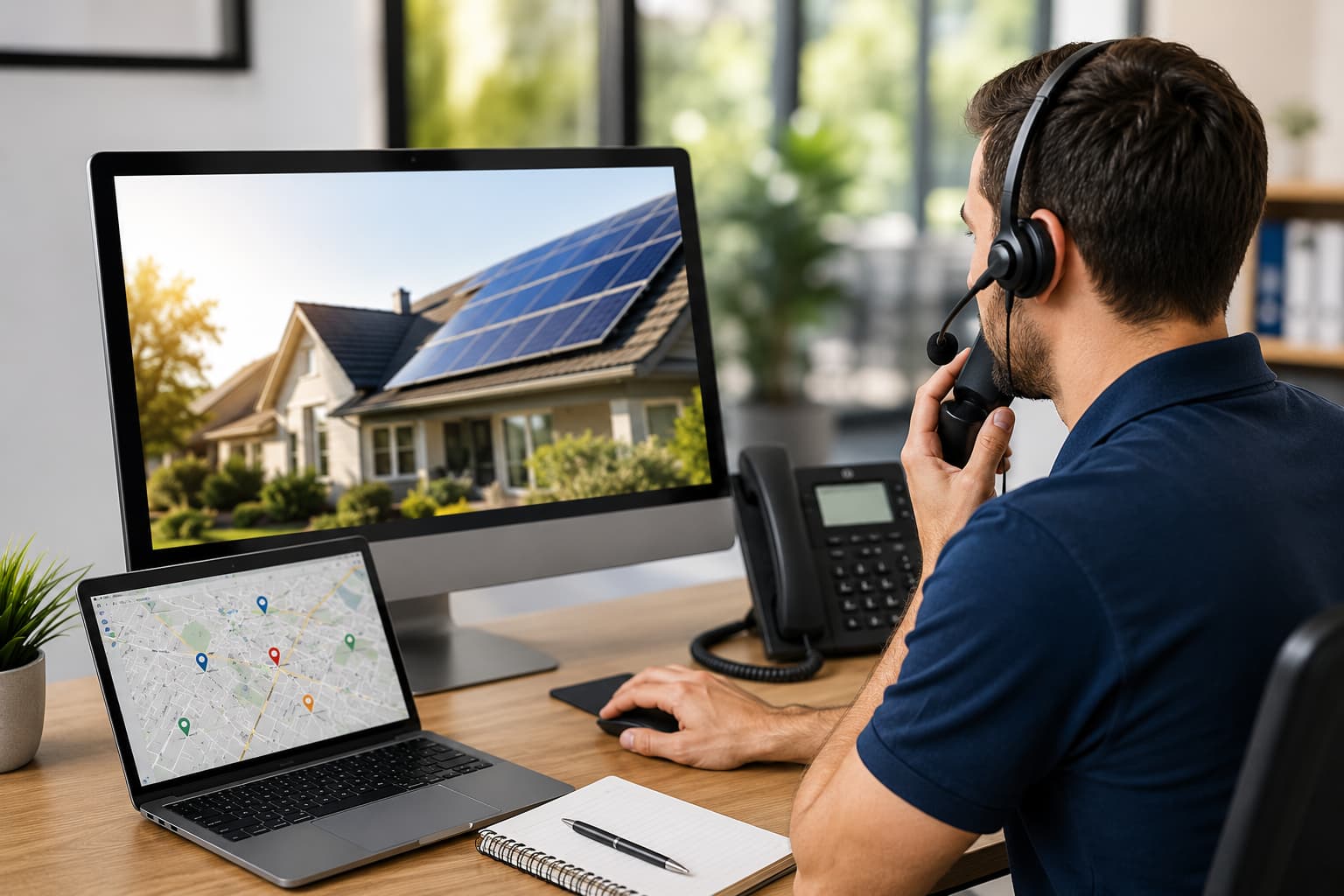
You don't need a call center to fix this. Most solar teams see a meaningful jump in contact rates from a few simple changes: routing new leads to a phone that's actually answered during business hours, sending an automatic text the moment a form is submitted, and setting a hard internal rule that every new lead gets a call attempt within 10-15 minutes, not by end of day.
If your ad spend is generating leads at a steady pace but your booked appointments don't reflect it, this is almost always the first place to look — before touching your targeting, your offer, or your budget.
The Bottom Line
Solar is a high-consideration purchase decided in a narrow window. Winning it isn't just about getting in front of homeowners — it's about being the first, most responsive company they hear from. Fix the response time and the lead quality problem often takes care of itself.
Get a Free Lead AuditWant leads like this for your solar business?
We run exclusive Meta ad campaigns for solar installers, sellers, and technicians — no long-term contracts.
Get a Free Lead Audit